



The Benefits of Using Omron Relay in Industrial Automation
Industrial automation is the use of control systems, such as computers or robots, and information technologies for handling different processes and machineries in an industry to replace a human being. It is the second step beyond mechanization in the scope of industrialization.
One of the key components of industrial automation is the relay, which is a device that switches electric circuits by their output section driven by an operational signal, which is triggered by an electric input signal controlled by switching devices. Relays are used for various purposes, such as switching high-voltage or high-current circuits, isolating circuits, protecting circuits, and controlling logic functions.
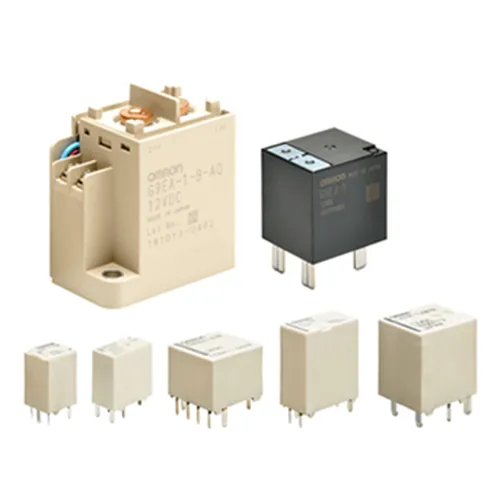
Omron is a professional manufacturer of relays, offering a wide range of products for different applications and industries. Omron relays are known for their stable quality, dependable reliability, steady performance, and continuous innovation. Some of the benefits of using Omron relays in industrial automation are:
Omron relays have a long service life and low failure rate, which reduces maintenance costs and downtime.
Omron relays have stable switching capacity and can handle standard currents and voltages, which enables them to control mainstream equipment and devices.
Omron relays have quick response time and stable sensitivity, which improves the efficiency and accuracy of the control system.
Omron relays have a compact design and low power consumption, which saves space and energy in the control panel.
Omron relays have various features and functions, such as latching, ratchet, safety, solid-state, terminal, and I/O relay types, which can meet different needs and requirements of the industrial automation system.
In conclusion, Omron relays are a suitable option for industrial automation applications, as they offer many practical advantages over other types of relays. Omron relays can help optimize the productivity, safety, quality, and profitability of the industrial process.